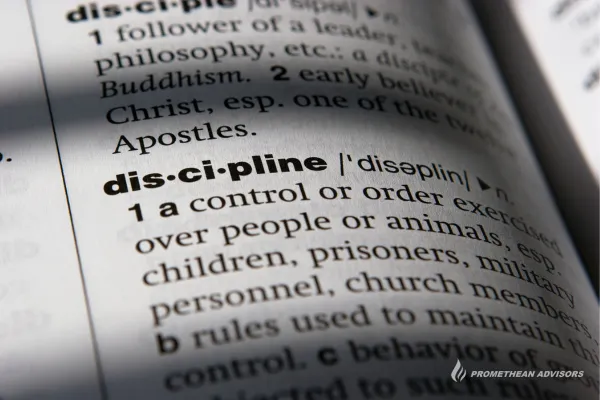
Growth Doesn’t Break Businesses—Lack of Discipline Does
Most leaders blame growth when things start to feel out of control.
Suddenly communication slips. Execution becomes inconsistent. Problems that used to be manageable start showing up everywhere. The natural conclusion is that the business “grew too fast.”
That’s rarely the real issue.
Growth doesn’t break businesses. It exposes the absence of discipline that was already there.
Discipline Is What Makes Growth Sustainable
In smaller organizations, effort covers a lot of flaws. People step in where systems don’t exist. Leaders fill gaps personally. Decisions happen quickly because there are fewer layers.
As the business grows, those informal methods stop working.
Discipline is what replaces heroics.
It shows up as:
Clear priorities instead of constant trade-offs
Defined decision rights instead of escalation
Standard ways of working instead of improvisation
Without discipline, growth amplifies chaos. With it, growth becomes manageable—even predictable.
Why Leaders Resist Discipline
Discipline often gets misunderstood as bureaucracy.
In reality, discipline isn’t about control—it’s about freedom. It reduces friction, eliminates rework, and gives teams confidence to act without constant oversight.
Leaders resist it because:
It requires slowing down to think
It exposes inconsistencies in how decisions are made
It forces alignment across functions
But avoiding discipline doesn’t preserve agility. It erodes it.
Where Discipline Matters Most
Discipline matters most in three areas:
Decision-Making
When it’s unclear who decides what, everything slows down. Leaders get pulled into issues that shouldn’t require their involvement.Execution Standards
If “good enough” varies by team, performance becomes inconsistent. Discipline defines what acceptable execution looks like—everywhere.Accountability
Discipline makes accountability objective. Expectations are clear, and results are measurable.
Discipline Scales What Works
Well-run businesses don’t rely on extraordinary effort to produce ordinary results.
They rely on discipline to:
Make performance repeatable
Reduce dependency on individuals
Allow leaders to focus on strategy instead of correction
Growth becomes less about pushing harder and more about reinforcing what already works.
The Leadership Shift
Leaders who embrace discipline stop asking, “How do we keep up?”
They start asking, “What needs to be true for this to work without us?”
That shift is what allows businesses to grow without losing control.
