
consulting
-

What Makes One Business Worth Millions More Than Another?
Two companies can post similar annual revenue. They can operate in the same industry and serve nearly identical customers. Yet one can be worth significantly more than the other. Why? Because business value is driven by far more than top-line revenue. Whether you plan to sell your business next year or lead it for another…
-

Why Successful Businesses Schedule Time to Solve Problems Before They Become Emergencies
Most business owners’ calendars are packed with customer meetings, sales calls, project updates, and operational fire drills. Very few calendars include something just as critical: dedicated time to improve the business itself. That’s a costly oversight. Many companies get so focused on delivering today’s work that they never invest in making tomorrow’s work easier. The…
-

The Biggest Risk to Your Business Isn’t the Economy — It’s Being Unprepared for Growth
Every business owner spends time worrying about risk: economic uncertainty, inflation, labor shortages, rising costs, new competitors. These concerns are real and deserve attention. But there’s a risk that gets far less airtime — and it can be just as costly: not being ready when opportunity shows up. Most leaders assume growth is automatically good…
-

If Your Business Doubled Next Year, Would It Actually Be Ready?
Growth sounds exciting—until it happens faster than your business is built to handle. Imagine your revenue doubling over the next twelve months. Could your systems keep up? Could your managers lead larger teams? Would customer service stay consistent? Would your current processes hold up under the pressure? Most business owners focus heavily on creating growth…
-

Before You Hire Another Employee, Ask These Five Questions
Hiring often feels like the obvious solution to a growing business. The workload keeps increasing. Customers are waiting. Projects are piling up. The natural response is to add another person to the team. But hiring doesn’t always solve a capacity problem—sometimes it just spreads existing inefficiencies across a larger team, and the same problems resurface…
-
7 Signs Your Business Has Outgrown the Way You Manage It
Every successful business eventually reaches a turning point: the management style that built the company stops being the management style that can grow it. The habits, instincts, and hands-on decisions that got you here can quietly become the very things holding you back. At first, the warning signs are easy to miss. You find yourself…
-

Your Biggest Competitor Probably Isn’t Who You Think It Is
When business owners think about competition, they usually picture another company. A rival offering similar products. A competitor with lower prices. A larger organization entering the market. Those competitors certainly matter. But for many businesses, the greatest threat isn’t another company. It’s internal stagnation. Markets evolve. Technology advances. Customer expectations change. Businesses that fail to…
-
The One Number Every CEO Should Review Every Monday Morning
Every executive dashboard contains dozens of numbers. Revenue. Profit. Cash flow. Sales activity. Production output. Customer satisfaction. While all of these matter, there’s one question many leadership teams overlook: Which metric tells us whether the business is getting healthier—not just busier? Many organizations measure activity instead of performance. They celebrate how much work is happening…
-

Why Your Business Feels Stuck Even Though Revenue Is Growing
Revenue is increasing. New customers are coming in. The pipeline looks healthy. From the outside, your business appears to be doing exactly what every owner hopes for. So why does it feel like you’re working harder than ever? This is one of the most common frustrations I hear from business owners. Growth is happening, but…
-

Your Business Doesn’t Need More Customers—It Needs Better Decisions
When growth slows, the first instinct is often to generate more sales. Increase marketing. Hire another salesperson. Launch another campaign. Find more leads. Sometimes that’s exactly the right answer. Often, it isn’t. Many organizations already have enough opportunity. What they lack is consistent decision quality. Poor decisions quietly reduce profitability every day. Projects begin without…
-

If You Stopped Working for 30 Days, What Would Happen to Your Business?
It’s a question few owners like to think about. Not because they don’t know the answer. Because they do. Many businesses are successful only because the owner is constantly solving problems, approving decisions, answering questions, and keeping everything moving. Remove the owner, and momentum slows almost immediately. This isn’t a people problem. It’s a systems…
-

Is Your Business Growing… or Just Getting More Complicated?
Growth should create opportunity—not confusion. When most business owners think about growth, they picture higher revenue, new customers, larger teams, and expanding markets. What they don’t anticipate is complexity. Every new employee introduces another communication path. Every new product creates another process. Every new customer brings additional expectations. Every expansion adds another layer of coordination.…
-

Is Your Business Too Dependent on You? Five Warning Signs Every Owner Should Know
Many business owners take pride in being involved. They know their customers. They solve problems quickly. They make important decisions. They keep the business moving. But involvement can quietly become dependency. When too much of the organization relies on one individual, growth slows and business value decreases. Warning Sign #1: Every Important Decision Requires Your…
-

The Business Owner’s Guide to Preparing for an Economic Slowdown
Economic uncertainty has become a recurring part of doing business. Interest rates fluctuate. Consumer demand shifts. Supply chain costs change. Market confidence rises and falls. While no leader can control the economy, every leader can improve how prepared their organization is to respond. Preparation begins long before conditions deteriorate. Strengthen Your Financial Position Companies entering…
-

Why Profitable Companies Still Run Out of Cash (And How to Prevent It)
One of the biggest misconceptions in business is that profitability guarantees financial stability. It doesn’t. Every year, profitable businesses struggle to pay suppliers, delay investments, or rely on short-term financing—not because they’re losing money, but because they’re running out of cash. Cash flow and profitability are not the same thing. A company can show healthy…
-

The Companies That Win the Next Decade Will Master Business Adaptability
Business history is filled with examples of successful organizations that struggled when conditions changed. Many had strong brands. Many had talented employees. Many had substantial resources. What they lacked was adaptability. Today, adaptability is becoming one of the most important characteristics of high-performing organizations. Markets change faster than ever before. Customer expectations evolve continuously. Technological…
-

Why Strategic Patience Is Becoming a Leadership Superpower
Modern business rewards speed. Leaders are encouraged to move quickly, act decisively, and seize opportunities before competitors do. While speed remains important, another leadership capability is becoming increasingly valuable: Strategic patience. Strategic patience does not mean indecision or delay. It means understanding which decisions require immediate action and which decisions benefit from additional observation, analysis,…
-

The Silent Threat to Business Growth: Organizational Drag
Every business expects challenges as it grows. What many leaders fail to anticipate is how much growth can be slowed by factors that don’t appear on financial statements or performance dashboards. This hidden force is organizational drag. Organizational drag occurs when internal friction begins consuming more energy than the organization realizes. Decisions take longer. Projects…
-
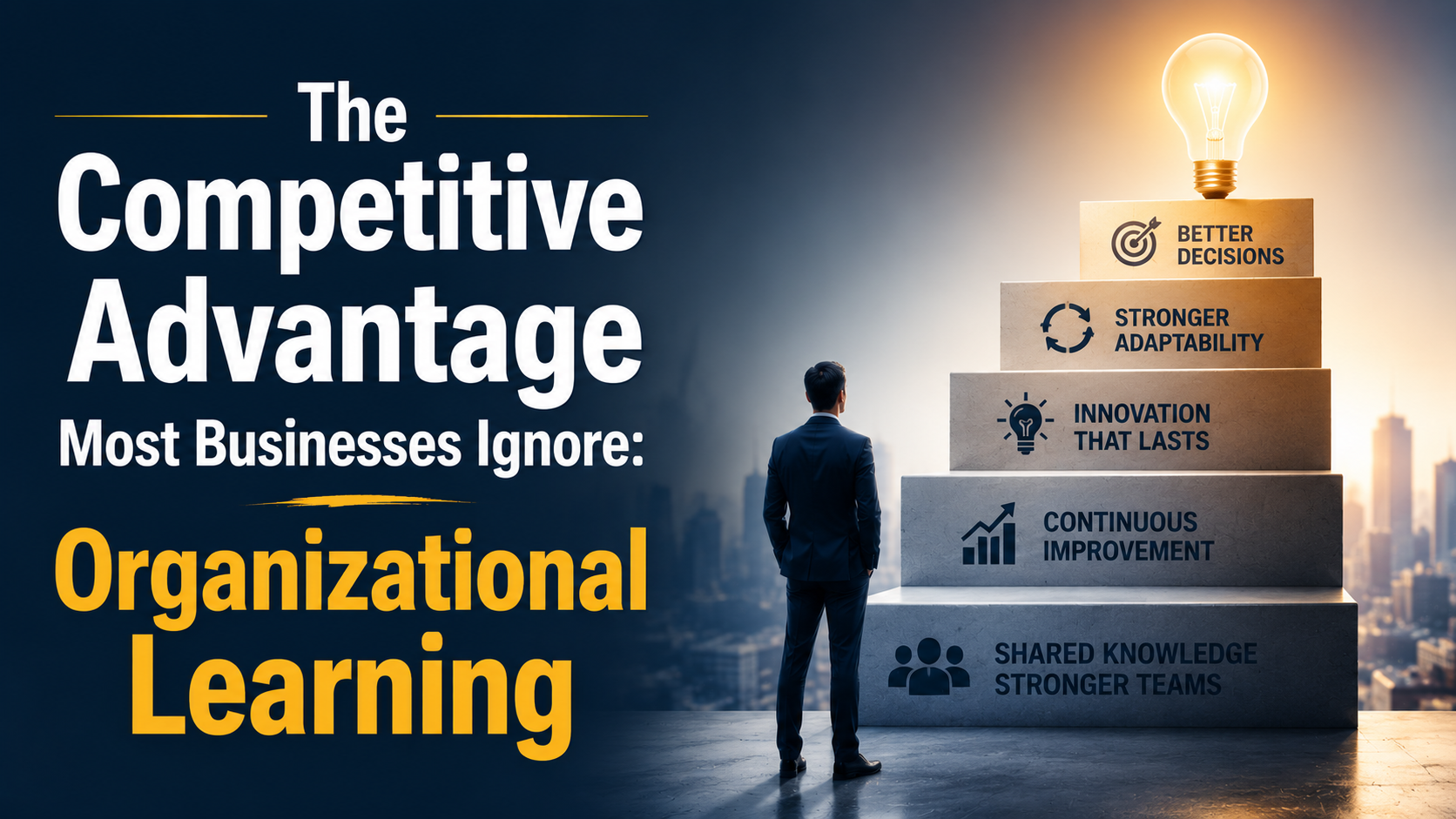
The Competitive Advantage Most Businesses Ignore: Organizational Learning
Every organization learns. The question is whether it learns fast enough. In today’s business environment, the speed at which an organization learns may be more important than the resources it possesses. Markets change. Technology evolves. Customer preferences shift. Competitors innovate. The organizations that adapt most effectively are often the ones that learn faster than everyone…
-
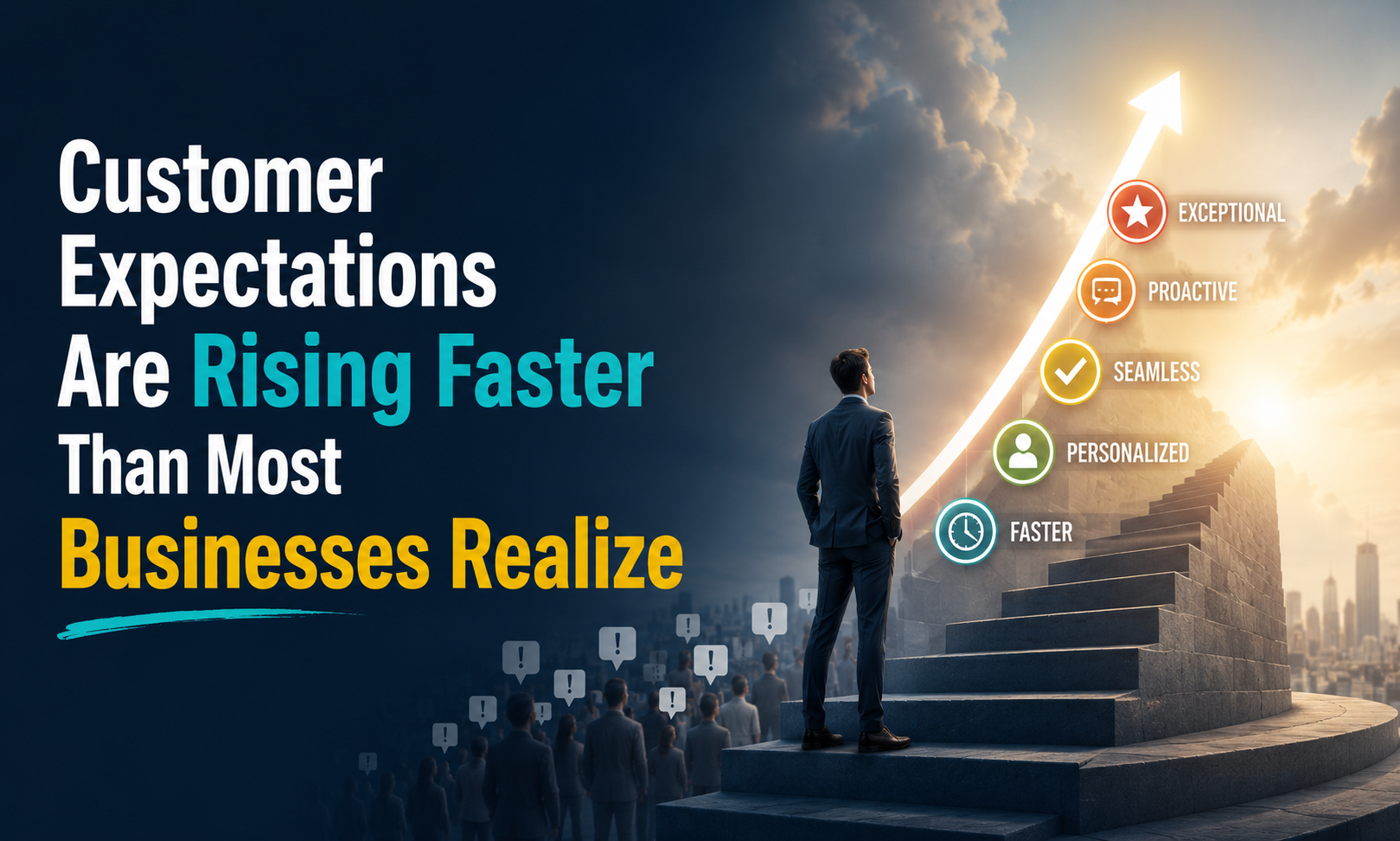
Customer Expectations Are Rising Faster Than Most Businesses Realize
Many organizations evaluate customer expectations based on direct competitors. That approach made sense when industries operated relatively independently. Today, customers compare experiences across every interaction they have. The responsiveness they receive from a technology company influences expectations for professional services. The convenience they experience with an online retailer influences expectations for manufacturers. The transparency they…
-

Why More Companies Are Investing in Scenario Planning Instead of Annual Forecasting
For decades, annual forecasting was the foundation of business planning. Leadership teams would establish revenue targets, build budgets, allocate resources, and create plans based on expected market conditions for the year ahead. That approach worked reasonably well when change occurred gradually. Today’s business environment is different. Economic shifts happen faster. Customer behavior changes more rapidly.…
-

The Most Dangerous Assumption in Business Growth
Growth creates confidence. Revenue increases. Teams expand. Demand rises. Momentum builds. And during periods of growth, many businesses quietly begin operating under one dangerous assumption: “If things are working now, they will continue working as we scale.” That assumption creates major operational risk. The systems that support a business at one stage often begin breaking…
-

Why More Businesses Are Re-Evaluating Middle Management Roles
For years, middle management acted as the communication bridge inside organizations. Information moved downward from leadership and upward from operational teams. Managers coordinated execution, monitored performance, and maintained alignment across departments. That role is now changing rapidly. Modern businesses are becoming flatter, faster, and more technology-driven. Real-time communication tools, automation, and direct executive visibility are…
-

The Businesses Winning in 2026 Are Solving Problems Before Customers Notice Them
Most companies still operate reactively. A customer complains, then the issue gets addressed. Performance drops, then leadership investigates. Operational breakdowns become visible only after they begin affecting revenue, timelines, or customer trust. But the companies gaining real competitive advantage in 2026 are operating differently. They are building systems that identify friction early—before customers ever experience…
-

Why Process Improvement Efforts Often Make Businesses More Complicated
Most organizations recognize when inefficiency becomes a problem. Processes slow down. Teams duplicate work. Delays increase. Frustration grows. The natural response is usually process improvement. New workflows are introduced. Additional approvals are added. Reporting expands. Systems become more detailed in an effort to create control. But many businesses unknowingly create a second problem while trying…
-

The Real Reason Strategic Plans Fail After Q1
Most organizations begin the year with a strategic plan. Goals are defined. Initiatives are outlined. Leadership teams align around priorities and performance targets. And then operational reality takes over. By the end of the first quarter, many strategic plans are already losing traction—not because the strategy was flawed, but because execution systems were never strong…
-

Why Smart Companies Are Rebuilding Their Operating Models in 2026
For years, businesses optimized around predictability. Processes were designed for stability. Forecasts assumed gradual change. Teams operated within structures that remained relatively consistent over time. That environment no longer exists. Today, organizations are navigating faster market shifts, evolving customer expectations, labor changes, rising operational costs, and accelerating technology adoption—all at the same time. The companies…
-

Attention May Be the Most Undervalued Asset in Your Business
Every business tracks financial resources carefully. Revenue. Margin. Cost. Cash flow. But one of the most valuable resources inside any organization is rarely managed with the same discipline: Leadership attention. Where leadership attention goes, organizational energy follows. This becomes dangerous when attention is constantly fragmented. Many executives spend their days reacting—jumping between operational issues, meetings,…
-

Customer Experience Problems Usually Start Inside the Business
When customer experience declines, many organizations look outward first. They examine messaging, service touchpoints, marketing performance, or support channels. But most customer experience problems begin internally long before customers ever notice them. Misaligned teams. Unclear ownership. Delayed decisions. Poor communication between departments. Operational inconsistencies. Customers experience the downstream effects of internal friction. A delayed response…
-
Change Isn’t the Problem. Exhaustion Is.
Most organizations believe employees resist change. In reality, most employees resist poorly managed change. Businesses today are in a constant state of transition. New systems, new priorities, restructures, technology rollouts, evolving customer demands—it rarely stops. Leaders often assume that keeping pace with change is simply part of modern business. They’re right. What they often underestimate…
-
Consistency Is What Separates Strong Companies From Reactive Ones
Many businesses perform well when conditions are favorable. The real test is what happens when pressure increases. That’s where consistency becomes a competitive advantage. Consistency is often mistaken for routine or rigidity. In reality, operational consistency creates stability that allows organizations to adapt without losing control. Without consistency, businesses become reactive. Priorities shift constantly. Processes…
-

Visibility Without Accessibility Creates Leadership Distance
Many executives believe visibility equals leadership presence. They attend meetings. Join town halls. Send company updates. Walk through operations. And yet, teams still feel disconnected from leadership. Why? Because visibility alone doesn’t create accessibility. Employees don’t just want to see leaders. They want clarity around how leaders think, what matters most, and whether concerns can…
-

Trust Is Built Faster Than Most Leaders Think—And Lost Even Faster
Trust inside an organization is often misunderstood. Many leaders assume trust is built slowly over time through major actions and long-term relationships. In reality, trust is usually built—or damaged—through small, repeated moments. A delayed response. A missed commitment. An unclear expectation. A decision explained poorly. None of these seem significant on their own. But together,…
-

When Communication Breaks Down, Execution Follows
Most leaders believe their organizations communicate well. Until something goes wrong. A missed deadline. A duplicated effort. A decision made without the right input. A team moving in a different direction than expected. These issues are often labeled as execution problems. In reality, they’re communication failures. Not because people aren’t talking—but because the right information…
-

Why Pricing Is a Strategy—Not Just a Number
Pricing is often treated as a tactical decision. Set the number. Adjust when needed. Stay competitive. But in reality, pricing is one of the most powerful strategic levers a business has—and one of the most underutilized. Price doesn’t just determine revenue. It shapes customer perception, defines market position, and influences the type of clients a…
-

The Cost of Avoiding Hard Conversations in Business
Most business problems don’t start as big problems. They start as small issues that no one addresses directly. A missed expectation. A slipping deadline. A team member underperforming. A client relationship showing early signs of strain. Individually, these moments seem manageable. Easy to overlook. Easy to “handle later.” But when leaders avoid addressing them head-on,…
-

The Leadership Habit That Limits Team Growth
Most leaders want their teams to grow. They want stronger managers, better decision-makers, more ownership across the organization. But there’s a common habit that quietly prevents that from happening. Stepping in too quickly. When something goes wrong, strong leaders often respond immediately. They solve the issue, give direction, and keep things moving. It works. The…
-

Complexity Is Quietly Draining Your Business
Growth tends to bring complexity. More customers. More services. More processes. More layers. At first, it feels like progress. Then it starts to slow everything down. Complexity doesn’t usually announce itself. It builds gradually—one new process, one exception, one workaround at a time. Each addition makes sense in isolation. But over time, the system becomes…
-

The Slow Decisions That Quietly Kill Momentum
Not all bad decisions hurt a business. Some of the most damaging ones are the decisions that never get made. In many organizations, delay doesn’t look like a problem at first. It looks like caution. It looks like collaboration. It looks like “we’re still gathering input.” But underneath that, something more expensive is happening. Momentum…
-
Why Adaptability Is Replacing Efficiency as the Ultimate Advantage
For decades, efficiency has been the goal. Reduce cost. Eliminate waste. Optimize processes. Do more with less. Those principles still matter. But they are no longer enough. In today’s environment, efficiency without adaptability creates risk. Highly optimized systems are often fragile. They perform well under expected conditions but struggle when those conditions change. And in…
-

The New Expectation: Businesses That Adapt in Real Time
Customers no longer compare you to your direct competitors. They compare you to the best experience they’ve had anywhere. That shift has changed the standard. Responsiveness, transparency, and consistency are no longer differentiators. They are expectations. And organizations that can’t meet those expectations in real time begin to lose relevance—often before they realize it. The…
-

Not Everything That Moves Fast Is Progress
Speed has become a badge of honor in business. Faster decisions. Faster execution. Faster growth. Leaders are told that if they’re not moving quickly, they’re falling behind. There’s truth in that—but it’s incomplete. Because speed without direction doesn’t create progress. It creates motion. In many organizations, the push for speed has outpaced clarity. Teams are…
-

Resilience Isn’t a Buzzword: Building Business Stability in an Uncertain Economic Climate
Today’s economic landscape is more unpredictable than it’s been in decades. Business leaders consistently cite uncertain economic conditions, shifting tariffs, labor volatility, and global complexity as top concerns for 2026. These aren’t fringe anxieties — they are central strategic issues every executive must address. This year, resilience isn’t optional. It’s an operational imperative. Resilience Is…
-

From Experimentation to Strategy: AI as a Core Business Driver in 2026
Artificial Intelligence has stopped being a futuristic differentiator and has become a strategic core for business operations, growth, and competitive advantage in 2026. What used to be an innovative conversation has transformed into boardroom reality: every organization must understand how to integrate AI with purpose — or risk falling behind. Companies today aren’t just using…
-

Why Operational Excellence Is the Real Competitive Advantage in Manufacturing
Many manufacturing companies believe their competitive advantage comes from their products. Better materials, innovative designs, and advanced equipment are often seen as the main drivers of success. While these factors matter, the companies that consistently outperform their competitors usually share another strength. They run exceptionally strong operations. Operational excellence allows organizations to produce consistently, deliver…
-

The Most Dangerous Assumption Leaders Make
Most organizations don’t fail because of obvious problems—they fail because of assumptions no one questions. When “everything seems fine,” hidden inefficiencies, misalignment, and risk quietly build beneath the surface. This blog explores how strong leaders challenge those assumptions, create space for intentional review, and stay curious enough to catch small issues before they turn into…
-

Stability Is a Strategy, Not a Lack of Ambition
Stability Is a Strategy, Not a Lack of Ambition In many leadership circles, stability is treated as a dirty word. If you’re not pushing harder, moving faster, or expanding aggressively, it can feel like you’re falling behind. Growth narratives dominate business conversations, often at the expense of sustainability. But stability, when intentional, is not stagnation.…
-

Why Manufacturing Companies Suddenly Hit an Operational Wall
Discover how consulting can drive results for your business. Learn the importance of operational leadership and systems improvement.
-

Not Every Problem Deserves to Be Solved
Explore effective strategies for scaling your manufacturing business. Learn how to manage growth while maintaining quality and efficiency.
-

Five Operational Warning Signs Manufacturing Leaders Should Watch
Discover strategies to enhance operational efficiency in your manufacturing business. Learn how to implement effective systems improvement techniques.